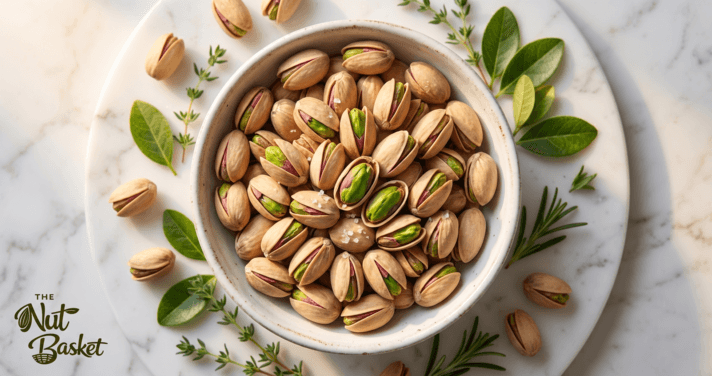
Pistachios are one of the world's oldest nuts, cultivated for over 9,000 years from Iran to the Mediterranean. They're called the "smiling nut" in Iran (because they split open when ripe) and the "happy nut" in China. And there's good reason to smile — modern nutritional science has confirmed that pistachios are one of the most nutrient-dense, health-promoting foods you can eat.
Per 28g serving (49 pistachios): 159 calories · 6g protein · 8g fat · 8g carbs · 3g fibre · Vitamin B6 (28% DV) · Thiamine (21% DV) · Copper (41% DV) · Manganese (15% DV)
Why Pistachios Are Different from Other Nuts
Pistachios have a unique nutritional profile that sets them apart. They have the highest protein content of any nut (6g per serving), they're one of the lowest-calorie nuts, they contain the highest levels of lutein and zeaxanthin (carotenoids critical for eye health), and they provide more potassium than most nuts — as much as half a banana in a single serving.
1. Exceptional Heart Protection
Multiple clinical trials show pistachios significantly reduce LDL (bad) cholesterol and total cholesterol while maintaining or increasing HDL (good) cholesterol. A study in the American Journal of Clinical Nutrition found that eating 1–2 servings of pistachios per day reduced LDL cholesterol by 8%. They also contain gamma-tocopherol, a unique form of Vitamin E that reduces inflammation in blood vessels.
2. Weight Management Despite Being Calorie-Dense
Research shows that pistachios are excellent for weight management. Their high protein and fibre create strong satiety signals that reduce hunger throughout the day. A fascinating study found that people who eat pistachios from the shell eat 41% fewer calories — because the shells provide visual feedback of how much they've consumed. Pistachios are also the lowest-calorie tree nut per serving.
3. Blood Sugar Control — Better than Most Foods
Pistachios have a remarkably low glycaemic response. When eaten with high-GI foods, they significantly blunt the blood sugar spike. Studies show that adding pistachios to white rice or bread reduces the glycaemic response of the whole meal. This makes them particularly valuable for people with type 2 diabetes or insulin resistance.
4. Vision Protection with Lutein & Zeaxanthin
Pistachios contain more lutein and zeaxanthin than any other nut. These carotenoids accumulate in the retina and macula of the eye, where they act as internal sunglasses, filtering harmful blue light and protecting against age-related macular degeneration (AMD) and cataracts — the leading causes of blindness in people over 60.
5. Gut Health and Prebiotic Effect
Two studies have shown that pistachio consumption increases the number of beneficial gut bacteria (Lactobacillus and Bifidobacterium) compared to other nuts. The high fibre content (3g per serving) acts as a prebiotic, feeding the beneficial bacteria that produce short-chain fatty acids — compounds that protect the gut lining and reduce inflammation throughout the body.
Roasted vs Raw Pistachios: Which Is Better?
- Raw pistachios: retain maximum antioxidants and Vitamin E
- Dry-roasted: slightly reduced nutrients but enhanced flavour and crunchiness
- Avoid oil-roasted: adds unnecessary calories and can oxidise the nuts' oils
- Lightly salted is fine; heavily salted adds excess sodium
- TheNutBasket's Iranian pistachios are slow dry-roasted to preserve maximum nutrition