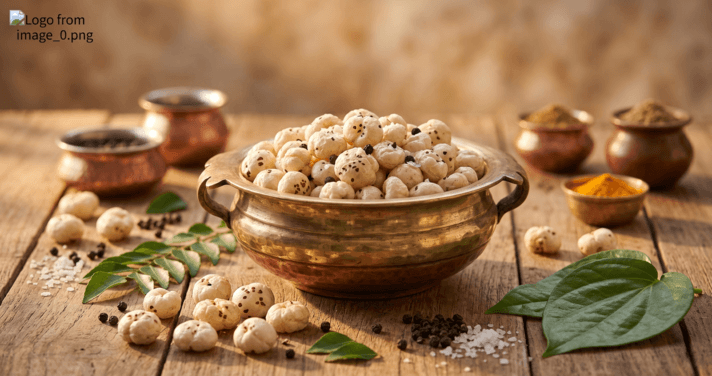
In Ayurveda — India's 5,000-year-old system of medicine — makhana (Euryale ferox, or lotus seeds) is classified as a Sattvic food: pure, light, and deeply nourishing for body and mind. It appears in Charaka Samhita, one of Ayurveda's foundational texts, as a rejuvenating (Rasayana) food that slows ageing and promotes vitality. Now, modern pharmacological research is systematically confirming these ancient claims.
Makhana is classified in Ayurveda as: Madhura (sweet taste) · Guru (heavy to digest, nourishing) · Shita (cooling) · Balya (strength-giving) · Vrushya (reproductive health) · Shukrala (improves sperm quality). It balances all three doshas — Vata, Pitta and Kapha.
1. Anti-Ageing Effects (Rasayana Property)
Makhana contains kaempferol — a flavonoid antioxidant that has shown remarkable anti-ageing properties in multiple research studies. Kaempferol inhibits the ageing process at the cellular level by reducing oxidative stress, protecting DNA from damage, and suppressing inflammatory enzymes. In animal studies, kaempferol has extended lifespan by 15–20%. This aligns directly with Ayurveda's classification of makhana as a Rasayana (rejuvenating) food.
2. Kidney and Urinary Health
Ayurveda has long used makhana for kidney strengthening (Mutrala property). Modern research confirms that fox nuts have diuretic properties that support kidney function and may help prevent kidney stone formation. They're low in sodium and potassium — making them suitable for people with kidney disease who need to monitor these minerals carefully.
3. Digestive Balance
In Ayurveda, makhana is described as having Grahi property — meaning it helps consolidate and strengthen the digestive system. This corresponds to modern findings: makhana contains resistant starch that feeds beneficial gut bacteria, while its astringent properties help treat diarrhoea and intestinal weakness. It's one of the few foods recommended for both constipation AND loose motions in different preparations.
4. Heart Health — Beta-Glucan Content
Makhana contains significant amounts of beta-glucan — a soluble fibre that has been clinically proven to reduce LDL cholesterol and lower cardiovascular disease risk. The American Heart Association recognises beta-glucan as a cholesterol-lowering agent. Makhana is also exceptionally low in saturated fat, making it heart-protective from multiple angles.
5. Blood Sugar Management
Despite being a carbohydrate-rich food, makhana has a low glycaemic index (~50) compared to most snacks. The resistant starch in makhana slows glucose absorption and reduces post-meal blood sugar spikes. Multiple studies show it improves insulin sensitivity in pre-diabetic patients.
6. Reproductive Health (Vrushya Property)
Ayurveda classifies makhana as Vrushya — beneficial for reproductive health in both men and women. Modern research has found that kaempferol in fox nuts has protective effects on reproductive cells and hormonal balance. Traditional Ayurvedic kheer made with makhana and milk is still used to support fertility and postpartum recovery.
7. Anxiety and Sleep Support
Fox nuts contain an amino acid called glutamine which is a precursor to GABA — the brain's primary calming neurotransmitter. This may explain why makhana milk at night is a traditional Ayurvedic remedy for sleep. Early research suggests makhana extract may have mild anxiolytic (anti-anxiety) properties, validating its use in Ayurvedic stress management protocols.
How to Eat Makhana for Best Results
- Roasted with ghee + black pepper: best for digestion and absorption
- Makhana kheer at night: supports sleep and reproductive health
- Raw makhana in morning milk: Ayurvedic Rasayana protocol
- Trail mix with other nuts: balanced energy snack
- Makhana soup or curry: warming, nourishing winter meal